
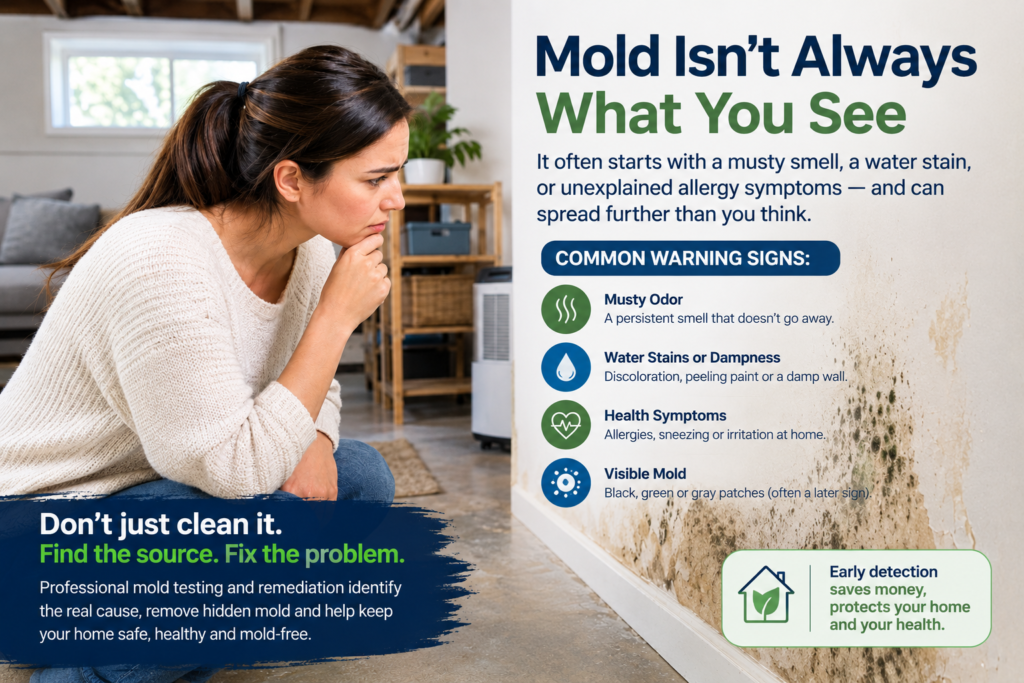
There’s a particular kind of dread that comes with noticing a musty smell in your basement, or spotting a water stain creeping across the ceiling and not knowing how long it’s been there. Most homeowners have felt it at some point. Mold has a way of showing up quietly and then becoming a much bigger problem than it first appeared to be and by the time it’s obvious, it’s usually already spread further than you’d think.
The Warning Signs Aren’t Always What You Expect
Visible mold the black or green patches people picture is actually one of the later signs, not the first. Usually it starts with smell. That musty, slightly earthy odor that doesn’t go away no matter how much you clean or air out the room. Peeling paint, bubbling wallpaper, or a wall that feels damp to the touch are also worth paying attention to, especially if the house has had any history of leaks, roof damage, or flooding. Water problems rarely resolve on their own once moisture gets trapped somewhere it can’t dry out.

Health symptoms are easy to write off too. If your allergies seem to flare up specifically at home and calm down when you’re away at work, on vacation, staying with family that pattern is worth taking seriously. It’s one of the more reliable, if overlooked, indicators that something in the air at home isn’t right.
Why “Just Cleaning It” Doesn’t Really Fix It
It’s tempting to grab bleach and a scrub brush and call it done. For a small, isolated spot, that might actually be fine. But mold is a symptom, not the root problem it shows up because moisture is present, and if that moisture is still there after you’ve wiped away the visible growth, the mold comes back. Often within days.
This is really where things go wrong for a lot of homeowners: they treat the part they can see and never find out how far it’s actually spread. Mold gets into places you’d never think to check: behind baseboards, inside wall cavities, under carpet padding, in HVAC ductwork. A mold testing company can actually map this out before any cleanup starts, which matters more than people expect. Testing tells you what type of mold you’re dealing with, how concentrated it is, and whether it’s confined to one visible patch or already working its way through the house. Skipping that step means you’re often guessing at the size of the problem instead of knowing it.
What Actually Happens During Remediation
Professional mold remediation isn’t just a more thorough cleaning it’s a different process entirely. It typically starts with an inspection, often using moisture meters or thermal imaging, to find damp areas that aren’t visible on the surface. Once the scope is understood, the affected space gets sealed off so spores don’t spread to the rest of the house while work is happening. This containment step is one a lot of DIY attempts skip entirely, and it’s a big reason mold ends up in a second room after someone tries to clean it up themselves.
From there, materials that can’t be saved drywall, insulation, sometimes flooring get removed and disposed of properly, and everything else gets cleaned using HEPA filtration equipment built to capture spores that a regular vacuum or air purifier just isn’t strong enough to catch. The part that matters most, though, is fixing whatever let the moisture in to begin with. A remediation crew that doesn’t address the leaky pipe, the poor ventilation, or the drainage issue is really only buying you a few months before the mold shows up again. Good companies finish the job with a follow-up test, so you have actual confirmation the problem is resolved instead of just hoping it is.
Is It Really Worth the Cost?
Remediation isn’t cheap, and it’s fair to weigh that cost carefully. But it helps to think about what you’re comparing it to. Mold that’s left to spread can eat into structural wood and drywall over months or years, and by the time that damage shows up, the repair bill is usually a lot bigger than remediation would have been. It also tends to come up during home sales inspectors flag it, buyers get nervous, and deals can slow down or fall apart over it. Add in the potential toll on your family’s health from ongoing exposure, and professional remediation starts to look less like an expense and more like something that saves you money later.
So When Do You Actually Need to Call Someone?
Not every mold spot needs a full crew. A patch smaller than roughly 10 square feet, with no obvious moisture source feeding it, is often something you can handle yourself with basic precautions. But if it keeps coming back, if it’s spread across a larger area, if it’s gotten into your air ducts, or if people in the house are dealing with symptoms that won’t go away, that’s the point where DIY stops making sense. Bringing in a mold testing company first to figure out what you’re actually dealing with, then following up with professional mold remediation, tends to be the more reliable path at that stage.
Picking the Right Company
Not all mold companies operate the same way, so it’s worth asking a few questions before hiring one. Do they test before and after the work? Do they explain how they’ll contain the area? Are they identifying the moisture source, or just removing what’s visible? Any company that skips straight to cleanup without figuring out why the mold showed up in the first place is likely setting you up for a repeat visit down the line.
The Takeaway
Mold is rarely just about appearances. It’s usually your home telling you that moisture has gotten somewhere it shouldn’t be, and ignoring it tends to cost more the longer it sits in repairs, in your health, and sometimes in your home’s resale value. Getting an accurate read on the problem and handling it properly the first time beats chasing it room to room for years.