
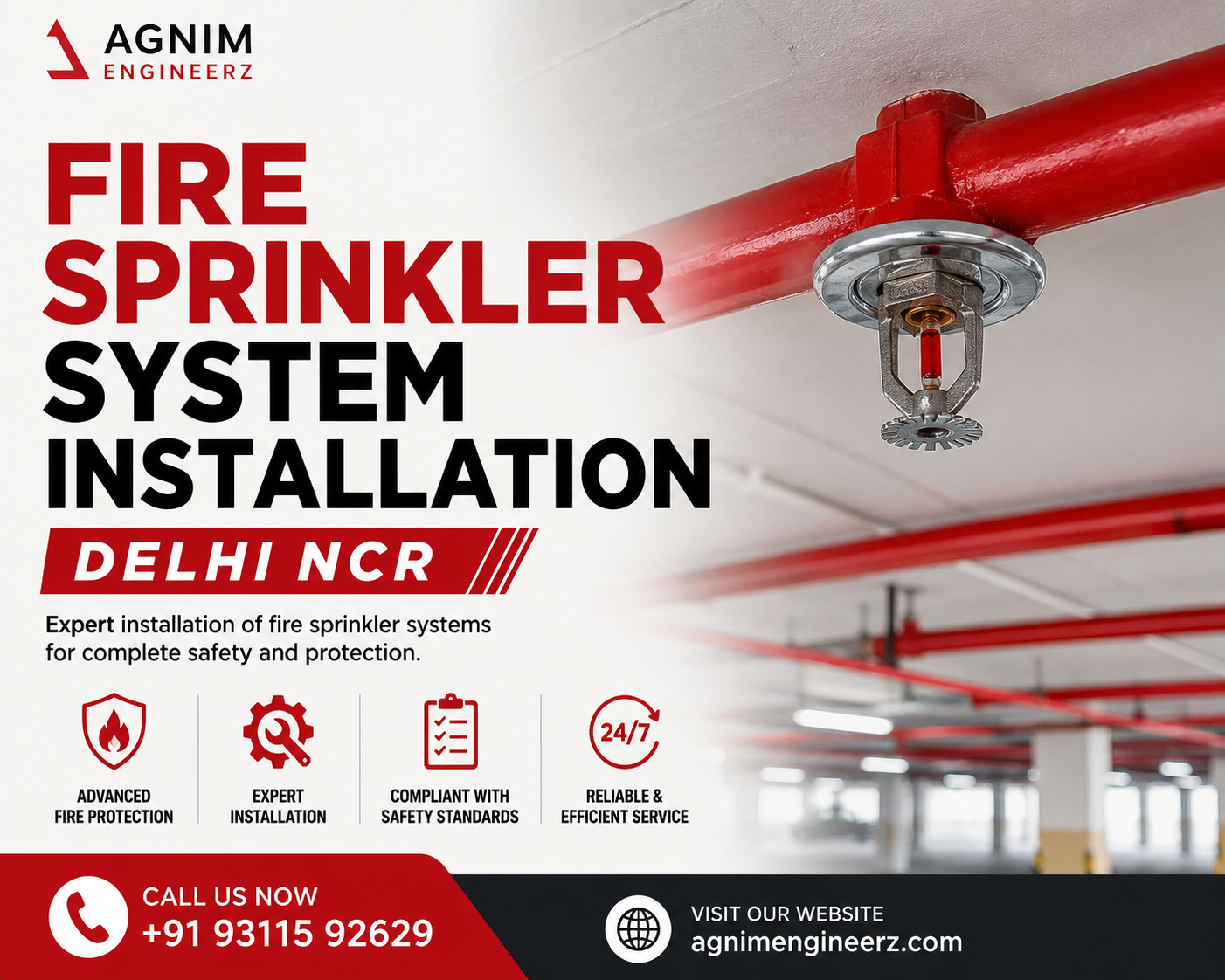
Fire is one of the fastest-moving threats any facility can face. Within minutes, a small spark can turn into a blaze that destroys equipment, data, and lives. This is why every modern building — from server rooms to industrial plants — relies on a well-engineered fire suppression system to detect danger early and stop it before it spreads. In this guide, we’ll break down exactly how these systems work, the science behind them, and why choosing the right technology, like a clean agent fire suppression system, can make all the difference.
What Is a Fire Suppression System?
A fire suppression system is an engineered network of detectors, control panels, agent storage cylinders, piping, and discharge nozzles designed to identify a fire at its earliest stage and extinguish it automatically — often before human intervention is even possible. Unlike a simple fire alarm that only warns occupants, a suppression system actively fights the fire.
These systems are built around three core components:
- Detection – Smoke, heat, or flame detectors sense the earliest signs of combustion.
- Control and Activation – A control panel processes the detector signal and triggers the release mechanism.
- Suppression – An extinguishing agent (gas, chemical, foam, or water) is discharged to remove one or more elements of the fire triangle: heat, fuel, or oxygen.
By interrupting this triangle, the system halts the chemical reaction that keeps a fire burning.
The Science Behind Fire Suppression
Every fire needs three things to survive: oxygen, fuel, and heat. Remove any one of them, and combustion stops. Different suppression technologies target different sides of this triangle:
- Water-based systems cool the fuel below its ignition temperature.
- Foam systems smother the fuel, cutting off its oxygen supply.
- Dry chemical systems interrupt the chemical chain reaction of combustion.
- Clean agent systems absorb heat and disrupt the reaction at a molecular level, without leaving residue.
This last category has become the preferred choice for environments where water or powder would cause more damage than the fire itself.
How a Clean Agent Fire Suppression System Works
A clean agent fire suppression system uses an electrically non-conductive, non-corrosive gas instead of water or foam to extinguish fire. Because the agent evaporates completely and leaves no residue, it’s ideal for protecting sensitive assets such as data centers, control rooms, museums, laboratories, and telecommunications facilities.
Here’s the step-by-step process:
- Early Detection – Sensitive smoke or heat detectors identify the fire in its incipient stage, often before visible flames appear.
- Signal Verification – The control panel confirms the alarm and triggers a countdown, giving occupants time to evacuate.
- Agent Release – Pressurized cylinders release the clean agent through a network of pipes and nozzles directly into the protected space.
- Flooding the Space – The agent disperses rapidly throughout the room, reaching design concentration within seconds.
- Suppression – The agent absorbs heat energy and interrupts the fire’s chemical reaction, extinguishing flames without damaging equipment.
- Post-Discharge Ventilation – Once the fire is out, the space is ventilated, and the system resets for future protection.
Because the entire cycle happens in seconds, a clean agent fire suppression system can stop a fire before it causes major structural or equipment damage — something traditional sprinklers often cannot achieve for electronic environments.
Why NOVEC 1230 Clean Agent Stands Out
Among the various clean agents available today, NOVEC 1230 clean agent has become an industry favorite, and for good reason. Developed as an environmentally responsible alternative to older halon-based systems, NOVEC 1230 offers a combination of safety, performance, and sustainability that’s hard to match.
Key advantages include:
- Zero ozone depletion potential – It does not harm the ozone layer, making it a compliant choice for long-term environmental regulations.
- Extremely low global warming potential (GWP) – Far lower than many competing clean agents, supporting corporate sustainability goals.
- Safe for occupied spaces – NOVEC 1230 clean agent has a wide safety margin, meaning it can be used in areas where people are present without posing a health risk at design concentrations.
- Fast extinguishing time – It suppresses fire in under 10 seconds, minimizing downtime and damage.
- Electrically non-conductive – Perfect for server rooms, switchgear rooms, and other electronics-heavy environments.
- No residue – Unlike powder-based agents, it evaporates completely, leaving sensitive equipment untouched.
Because of these properties, NOVEC 1230 has largely replaced older agents in critical infrastructure protection, especially where business continuity and equipment preservation are top priorities.
Where Are Fire Suppression Systems Used?
While every commercial building benefits from some form of fire protection, certain environments require specialized suppression technology:
- Data centers and server rooms – Where water damage would be catastrophic and downtime is costly.
- Electrical switchgear and control rooms – Where non-conductive agents are essential.
- Museums, archives, and libraries – Where irreplaceable artifacts must be protected from both fire and water damage.
- Industrial and manufacturing facilities – Where flammable materials or high-value machinery are present.
- Telecommunications hubs – Where continuous uptime is mission-critical.
In each of these settings, a properly designed clean agent fire suppression system offers rapid, damage-free protection that traditional sprinklers simply cannot provide.
Choosing the Right System for Your Facility
Not every space needs the same type of protection. Selecting the correct fire suppression system depends on several factors:
- The value and sensitivity of the assets inside the space
- Occupancy levels and safety requirements
- Local fire codes and industry regulations
- Budget and long-term maintenance considerations
- Environmental compliance goals
A qualified fire protection engineer will assess your facility’s layout, contents, and risk profile before recommending a solution — whether that’s a clean agent system, a water-mist alternative, or a hybrid approach combining detection technologies with targeted suppression.
Final Thoughts
Understanding how a fire suppression system works helps facility owners make informed decisions about protecting their people, assets, and operations. From early detection to rapid agent discharge, every component plays a critical role in stopping fire before it spreads. For environments where water and residue-based agents pose too great a risk, a clean agent fire suppression system — particularly one using NOVEC 1230 clean agent — delivers fast, safe, and environmentally responsible protection.
If you’re evaluating fire protection options for your facility, working with experienced engineers who understand both the technology and the regulatory landscape is essential. The team at Agnim Engineerz specializes in designing and installing advanced fire suppression solutions tailored to the specific risks of your space — helping you safeguard what matters most.