A successful solar installation starts long before panels reach the roof. Before installation can begin, solar professionals need accurate designs, complete documentation, and approval from the local Authority Having Jurisdiction (AHJ). This is where solar plan sets, PV design, and permitting become essential.
For installers, EPCs, and solar developers, choosing the right design and permitting process can make the difference between a project that moves smoothly and one delayed by repeated corrections. PTOEdge supports U.S. solar projects with engineering-focused documentation, jurisdiction-specific requirements, and permitting support designed to simplify the approval process.
Why Solar Plan Sets Matter in Every Solar Project
Solar plan sets are the technical foundation of a solar installation. They communicate how the system will be installed, how electrical components are connected, where equipment will be located, and whether the proposed system meets applicable codes and local requirements.
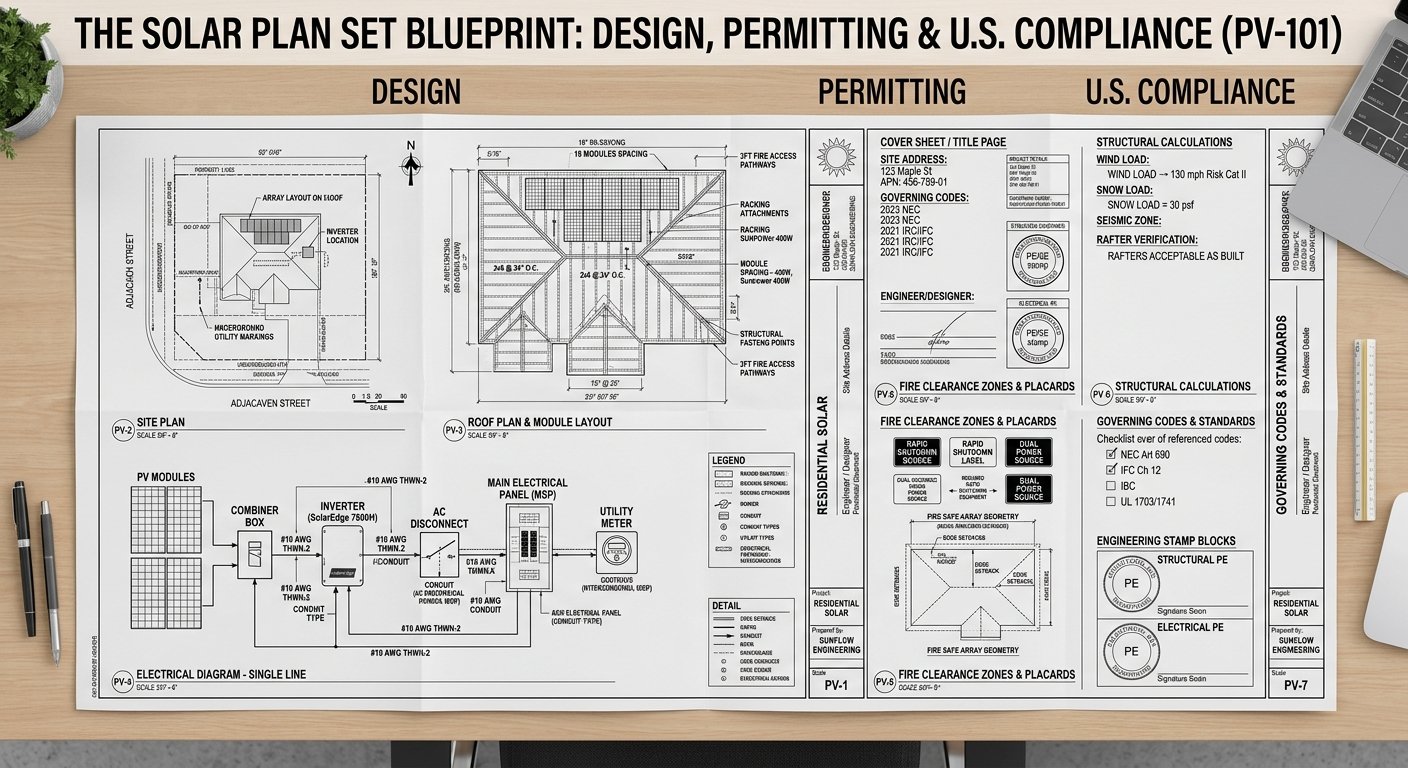
A complete plan set may include a site plan, roof layout, equipment specifications, electrical diagrams, structural information, system calculations, and required safety labels. These documents give reviewers the information they need to evaluate the proposed installation.
When plans are incomplete or contain incorrect information, an AHJ may request revisions before approving the permit. Those corrections can affect installation schedules and increase administrative work for solar companies.
That is why professional solar plan design should consider local requirements from the beginning rather than treating permitting as a separate step. A well-prepared design gives installers a stronger starting point for the permit application and helps different project stakeholders work from the same information.
What Should a Professional Solar Planset Include?
A properly prepared solar planset should provide enough technical information for the AHJ, utility, installer, and other project stakeholders to understand the proposed system.
Depending on the project and jurisdiction, the documentation can include site and roof plans, solar module layouts, equipment locations, electrical diagrams, structural and mounting details, load calculations, conductor and breaker information, system labeling, battery storage details, and utility interconnection information.
The exact requirements vary by location and project type. This is one reason standardized drawings cannot always be submitted everywhere without modification.
Professional PV design services account for the project location, equipment, system configuration, and applicable requirements before the documentation is finalized. This approach can help ensure that the drawings accurately represent the system being proposed rather than relying on information that may no longer match the final project.
Solar Design and Permitting Should Work Together
Solar design and permitting are closely connected. A design may look technically complete but still require changes if it does not follow the requirements of the local jurisdiction.
Effective solar design and permitting brings these considerations together during the design stage. The goal is to create documentation that is technically accurate while also addressing the requirements that matter during permit review.
For residential projects, residential solar design services can help installers prepare consistent documentation for rooftop systems, electrical upgrades, batteries, and other equipment. For larger portfolios, a structured design process also helps maintain consistency across multiple jurisdictions.
PTOEdge combines design knowledge with permitting experience so project documentation can be prepared with approval requirements in mind.
How Solar Permit Services Help Avoid Delays
Once the design documentation is ready, the next step is usually the permit application. This is where solar permit services can reduce the administrative workload for installers.
Every AHJ may have its own application process, forms, documentation requirements, and review procedures. A permit package that works in one jurisdiction may need adjustments in another.
Professional solar permit understand that these differences matter. They help organize the required documents and prepare submissions according to the applicable jurisdictional requirements.
A professional permitting workflow can also help identify missing information before submission. Instead of discovering an issue only after the application reaches the reviewer, installers can address documentation problems earlier in the process.
What Is a Solar Permit Package?
A solar permit package is the collection of documents submitted to obtain approval for a solar installation. The exact contents depend on the project and AHJ, but the package generally combines technical drawings and supporting documentation required for review.
A strong package should be consistent from page to page. Equipment shown on the site plan should correspond with the electrical diagrams, system specifications, and other project information.
This consistency matters because discrepancies can result in correction requests. Differences between module quantities, inverter information, electrical ratings, or equipment locations may require clarification before a project can proceed.
Careful preparation before submission can help reduce unnecessary review cycles and give installers a clearer record of the system being proposed.
Residential and Commercial Solar Design Requirements
Not every solar project has the same design requirements.
Residential installations often involve rooftop layouts, electrical service information, structural considerations, rapid shutdown requirements, equipment placement, and utility interconnection details. Commercial projects can require more extensive electrical documentation, structural information, equipment coordination, and three-line diagrams.
For this reason, residential solar design services should be tailored to the property and jurisdiction rather than relying on generic templates.
Commercial installers and EPCs may also benefit from scalable solar engineering design services that maintain consistent documentation across multiple projects while accounting for local requirements.
Why Solar Drafting Services in USA Projects Need Local Knowledge
Professional solar drafting services in USA projects involve more than simply drawing where panels will go. The drawings need to communicate technical information clearly and reflect the requirements of the jurisdiction where the system will be installed.
Setbacks, fire access pathways, structural criteria, electrical requirements, equipment placement, and utility rules can all affect the final documentation.
This makes local compliance knowledge an important part of solar drafting. A well-prepared drawing package can help installers avoid spending unnecessary time correcting basic documentation issues.
For solar businesses working across several states or jurisdictions, this becomes even more important because different municipalities and AHJs can have different submission requirements.
Choosing the Best Solar System Design Services
When comparing the best solar system design services, solar companies should look beyond drawing quality alone.
A useful design partner should understand accuracy, applicable code requirements, AHJ expectations, utility requirements, turnaround times, and revision support.
Drawings should accurately represent the proposed system and equipment. Designs should consider applicable NEC and local requirements. Documentation should be adapted to the jurisdiction instead of relying on one generic format.
Turnaround time also matters. Fast, accurate documentation can help installers maintain project schedules, while dependable revision support can make it easier to respond when an AHJ requests clarification or changes.
How Solar Engineering Design Services Support Better Approvals
Good solar engineering design services help connect the technical design with the approval process.
Before documentation is finalized, important details such as conductor sizing, voltage drop, breaker compatibility, structural requirements, equipment placement, and utility considerations should be reviewed as applicable to the project.
This proactive approach can reduce the chance that an obvious design issue becomes a correction after submission.
Engineering support can be especially valuable when projects involve unusual roof conditions, larger electrical systems, batteries, commercial applications, or requirements that need additional technical review.
The goal is not simply to produce attractive drawings. The documentation needs to communicate the system accurately and provide reviewers with the technical information they need.
Common Problems That Can Affect Solar Permit Approval
Several documentation issues can slow the solar approval process. One common problem is incomplete information. If required drawings or supporting documents are missing, the reviewer may be unable to complete the evaluation.
Another issue is inconsistency between documents. The module count, inverter model, battery information, electrical ratings, and equipment locations should remain consistent throughout the submission.
Jurisdictional requirements can also create problems. A design prepared for one location may not automatically satisfy another AHJ’s requirements.
Poorly organized documentation can create additional review work as well. Clear drawings, logical organization, accurate labeling, and complete supporting information make it easier for reviewers to understand the proposed system.
These challenges show why solar permit services and professional design should be considered together rather than as completely separate tasks.
The Connection Between Solar Plan Sets and Solar Permit Services
Solar plan sets and permitting are not separate parts of the project. They work together.
The plan set provides the technical information needed for review, while the permit process turns that documentation into an official approval to proceed with installation.
When the two processes are coordinated, installers can avoid common problems such as missing documents, inconsistent equipment information, incorrect jurisdictional requirements, and unnecessary revision cycles.
That is why working with a provider that understands both solar plan sets and solar permit services can create a more efficient workflow.
How Professional PV Design Services Help Solar Installers
Solar installers often manage multiple projects at different stages. While one project may be waiting for a permit, another may require revisions and another may already be scheduled for installation.
Professional PV design services can provide additional design capacity when internal teams are managing a high project volume.
A reliable design workflow can help installers receive consistent documentation without placing every drafting and engineering task on their own employees. This can be particularly useful for companies expanding into new markets or handling projects across multiple jurisdictions.
It also allows internal teams to spend more time on sales, project management, customer communication, and installation while specialized documentation is handled by experienced professionals.
A Better Way to Manage Solar Design and Permitting
Solar companies do not need to manage every technical document and jurisdictional requirement internally. A specialized partner can provide additional capacity while helping maintain consistent documentation across projects.
PTOEdge combines plan set preparation, PV design, permitting, PE review, and other solar engineering support under one workflow. The company works with installers, EPCs, and developers across U.S. jurisdictions.
For companies managing multiple projects, this approach can make it easier to maintain documentation standards while reducing the administrative burden placed on internal teams.
What to Look for in a Solar Permit and Design Partner
Before choosing a provider, solar companies should evaluate several factors. Experience with U.S. jurisdictions is important because requirements can vary significantly from one location to another.
It is also useful to consider whether the provider can support more than one part of the project. A company that can assist with solar plan design, PV documentation, engineering review, and permitting can provide a more connected workflow.
Turnaround time, communication, revision support, technical accuracy, and familiarity with residential and commercial projects are also important considerations.
The right partner should function as an extension of the solar company’s project team rather than simply delivering a drawing file and ending the process.
Final Thoughts
Accurate design documentation is one of the most important parts of a successful solar project. From the first roof layout to the final permit submission, every detail can affect how smoothly a project moves through review.
Professional PV design services, accurate solar plan sets, reliable solar design and permitting, and properly prepared permit packages can help solar companies reduce avoidable delays and keep projects moving.
For U.S. installers and EPCs, the right design and permitting partner can provide more than drawings. It can provide a structured process that connects engineering, documentation, AHJ requirements, and project approval.
PTOEdge provides solar plan set and permitting support for residential, commercial, and other PV projects across the United States, helping solar professionals move from design toward approval with greater confidence.