Losing a limb, or even part of one, changes daily life in ways that are hard to imagine until you’re living them. If you’re facing an upcoming prosthetic fitting, or you’re already an amputee looking for better care, walking into a prosthetist’s office for the first time can feel overwhelming. Knowing what to expect ahead of time can make the whole process feel a lot less intimidating.
Fort Myers has become home to some genuinely skilled prosthetic care providers, but not every clinic offers the same level of service. Here’s what you should know before booking that first appointment.
Start With the Right Questions, Not Just the Right Clinic
It’s tempting to just pick whichever clinic pops up first in a search or comes recommended by a friend. But prosthetics is a specialized field, and the provider you choose will shape your comfort, mobility, and confidence for years to come.
Before your visit, it helps to ask around — your surgeon, physical therapist, or even other amputees in local support groups often know which prosthetists have a strong reputation. Look for certification through the American Board for Certification in Orthotics, Prosthetics and Pedorthics (ABC), since this ensures the practitioner has met rigorous clinical and ethical standards.
It’s also worth asking whether the clinic works with a range of limb loss levels. Someone who lost toes or part of the foot has very different needs than someone with an above-knee amputation, and not every prosthetist has deep experience across the board.
Partial Foot Amputations Need Specialized Attention
One area that often gets overlooked is partial foot loss. Many people assume prosthetics are only for full limb amputations, but losing even part of a foot changes your balance, gait, and pressure distribution significantly.
A partial foot prosthesis is designed specifically to restore stability and even weight distribution for people who’ve lost toes, a portion of the forefoot, or undergone a Chopart or Lisfranc amputation. These devices are far more nuanced than they look — a poorly fitted partial foot prosthesis can lead to skin breakdown, joint pain, or compensatory issues in the opposite leg over time.
If this applies to you, ask your prosthetist directly about their experience fitting partial foot devices. Not every practice sees these cases often, and the fit here needs to be precise, since even small adjustments in the socket or footplate can change how weight moves through your foot with every step.
Get Your Paperwork and History in Order
Before you show up, gather anything relevant to your medical history: surgical reports, physician referrals, and any documentation from your current prosthesis if you’re replacing or upgrading one. If you already wear a prosthesis, bring it along, even if it’s uncomfortable or outdated — your prosthetist will want to see how it fits and where it’s falling short.
It also helps to jot down notes beforehand. What activities do you want to get back to? Are you dealing with skin irritation, pain, or instability? Do you have specific mobility goals, like returning to work, walking longer distances, or getting back into a favorite hobby? Bringing this list in gives your prosthetist a clearer picture instead of trying to remember it all on the spot.
What Actually Happens During the Fitting
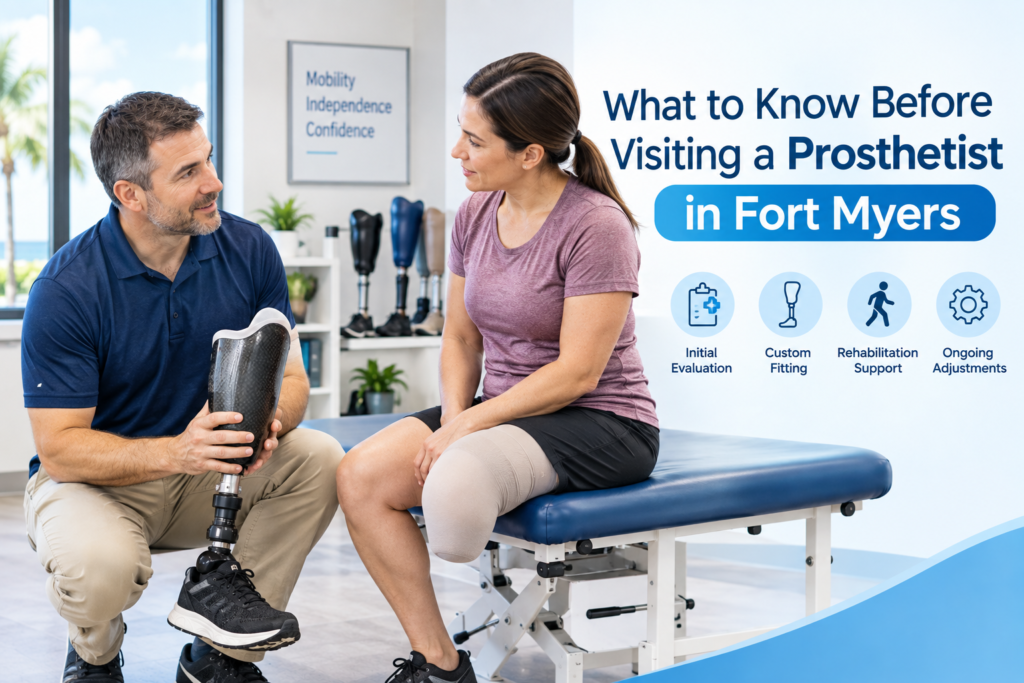
Your first appointment usually starts with an assessment of your residual limb: its shape, size, skin condition, and any scar tissue or sensitivity. From there, the conversation shifts toward your lifestyle and what you want your prosthesis to help you do.
This is also when your prosthetist will walk you through your options. Materials, socket designs, and componentry all vary depending on your activity level and personal preferences. Expect this to be a two-way conversation rather than someone simply handing you a device.
One thing that surprises a lot of first-time patients is how many fittings are typically needed. Getting a socket that fits correctly takes time and adjustment, sometimes several visits, before the final device is ready. This isn’t a sign that something’s wrong; it’s just part of getting a device that actually feels right on your body.
Why an On-Site Lab Makes a Real Difference
Here’s something worth asking about before you commit to a clinic: does it have its own lab, or does it send devices out to be manufactured elsewhere?
Clinics with an on-site prosthetics lab in Fort Myers can typically turn around adjustments and repairs much faster, since technicians can modify a socket or component the same day instead of shipping it out and waiting days or weeks for changes to come back. For anyone in the early adjustment period, when small tweaks are common, this can make an enormous difference in comfort and how quickly you’re able to get moving again.
It also tends to mean closer communication between the person fitting you and the person building your device, which often results in a more precise final product.
Understanding Insurance Before You Go
Prosthetic devices aren’t cheap, and insurance coverage in Florida can be confusing. Medicare, Medicaid, and private insurers all have different documentation requirements and coverage limits. Before your visit, call your insurance provider to understand your benefits, and ask the clinic’s billing team what paperwork they’ll need from your physician to get the process moving.
Many clinics have staff dedicated to helping patients navigate this, so don’t hesitate to lean on them. Understanding your costs upfront prevents surprises later.
What Comes After the Fitting
Getting your prosthesis is really just the beginning. Most patients go through a period of physical therapy and gait training to learn how to use the device safely and efficiently. It’s normal to feel awkward or even a little frustrated during this stage, adjusting to a new prosthesis takes time, patience, and practice.
Your prosthetist should be part of your care team well beyond that first fitting. Sockets need periodic adjustments as your limb volume changes, especially in the first year. Don’t wait for something to feel seriously wrong before reaching out; minor discomfort is worth mentioning early.
Final Thoughts
Visiting a prosthetist for the first time doesn’t have to be stressful if you go in prepared. Ask about credentials and specific experience, especially if you need a partial foot prosthesis, bring your medical history, come with a list of goals, and don’t be afraid to ask whether the clinic has an on-site lab that can make your care faster and more responsive.
The right prosthetist becomes a long-term partner in your mobility and independence, so take the time to choose one who truly listens and has the expertise to match your needs.