Manufacturing industries are under constant pressure to produce high-quality components faster, more accurately, and with greater operational efficiency. As production volumes increase and product designs become more complex, manufacturers are investing heavily in automation technologies that minimise downtime while maximising machine utilisation. One of the most significant innovations supporting modern machining is the automatic tool changer (ATC), a system that enables machine tools to switch between cutting tools automatically without operator intervention.
However, the performance of an automatic tool changer depends not only on the machine itself but also on the quality of its tool holders. Tool holders serve as the critical connection between the machine spindle and the cutting tool, directly influencing machining accuracy, vibration control, productivity, and tool life. Together, automatic tool changers and precision tool holders form the foundation of efficient CNC machining, supporting industries ranging from automotive and aerospace to medical devices and precision engineering.
Understanding Tool Management in CNC Machining
Modern CNC machining centres are capable of performing multiple machining operations during a single production cycle. Instead of manually replacing tools after every operation, manufacturers rely on automated systems that allow machines to change tools independently.
Efficient tool management offers several advantages:
- Reduced machine downtime
- Faster production cycles
- Improved machining accuracy
- Greater operational flexibility
- Lower labour dependency
- Better repeatability
- Increased spindle utilisation
- Higher production output
As manufacturers move toward smart manufacturing and Industry 4.0, automated tool management has become an essential component of advanced production systems.
What is an Automatic Tool Changer?
An automatic tool changer is a mechanical system integrated into CNC machining centres that automatically replaces cutting tools during machining operations without requiring manual intervention.
The ATC retrieves the required tool from a tool magazine, exchanges it with the tool currently mounted on the spindle, and continues machining according to the programmed sequence.
This automation enables uninterrupted machining while significantly reducing idle time between operations.
Automatic tool changers are widely used in:
- CNC machining centres
- Vertical machining centres
- Horizontal machining centres
- Milling machines
- Drilling centres
- Multi-axis machining systems
- Flexible manufacturing systems
How an Automatic Tool Changer Works
Although configurations vary depending on machine design, the operating sequence generally follows a structured process.
Once the CNC programme identifies the next machining operation, the machine spindle moves to the designated tool change position.
The automatic tool changer then:
- Releases the current tool
- Retrieves the required tool from the magazine
- Positions the new tool accurately
- Locks it securely into the spindle
- Confirms successful tool engagement
- Resumes machining automatically
This entire process typically takes only a few seconds, significantly improving production efficiency.
Key Components of an Automatic Tool Changer
Several components work together to ensure smooth tool exchange.
Tool Magazine
The tool magazine stores multiple cutting tools required during machining.
Depending on machine capacity, magazines may accommodate anywhere from a few tools to several hundred.
Tool Exchange Mechanism
The exchange arm transfers tools between the spindle and the magazine while maintaining positioning accuracy.
Reliable exchange mechanisms minimise cycle time and improve operational consistency.
Control System
The CNC controller coordinates tool selection, positioning, and spindle operations while ensuring every tool change follows the programmed machining sequence.
Sensors and Safety Systems
Modern ATCs incorporate sensors that verify tool presence, positioning, and proper locking before machining resumes.
These systems improve process reliability while reducing the risk of machining errors.
Benefits of Automatic Tool Changers
Reduced Downtime
Manual tool replacement interrupts production and increases non-productive time.
Automatic tool changers perform tool exchanges rapidly, allowing machines to continue operating with minimal interruption.
Increased Productivity
Faster tool changes translate directly into shorter production cycles and higher output.
Manufacturers can complete more components within the same production schedule.
Improved Machining Accuracy
Automated positioning ensures tools are consistently mounted with high precision.
This improves dimensional accuracy and repeatability across production batches.
Better Utilisation of CNC Machines
Machines spend more time cutting and less time waiting for manual intervention, maximising equipment efficiency.
Support for Complex Machining
Modern components often require multiple drilling, milling, boring, tapping, and finishing operations.
Automatic tool changers enable seamless transitions between these processes during a single machining cycle.
Understanding Tool Holders
While automatic tool changers automate tool replacement, tool holders ensure cutting tools remain securely mounted during machining.
A tool holder connects the cutting tool to the machine spindle while maintaining precise alignment, rigidity, and balance.
Even the most advanced machining centre cannot achieve optimal performance without high-quality tool holders.
Functions of Tool Holders
Tool holders perform several important roles during machining.
Secure Tool Clamping
The holder firmly secures the cutting tool to prevent movement during high-speed machining.
Stable clamping improves machining quality and reduces vibration.
Accurate Tool Positioning
Precise positioning ensures consistent cutting performance and dimensional accuracy throughout production.
Vibration Reduction
Properly balanced tool holders minimise vibration during machining.
Reduced vibration improves:
- Surface finish
- Tool life
- Spindle life
- Machining stability
Power Transmission
Tool holders efficiently transfer spindle torque to the cutting tool, enabling smooth machining even during demanding operations.
Types of Tool Holders
Manufacturers use different tool holders depending on machining requirements.
Common examples include:
- Hydraulic tool holders
- Shrink fit holders
- Collet chucks
- Milling chucks
- End mill holders
- Drill chucks
- Face mill arbors
- Precision boring holders
Each type offers specific advantages based on cutting conditions and application requirements.
Industries Benefiting from Automatic Tool Changers and Tool Holders
These technologies support numerous manufacturing sectors.
Major industries include:
- Automotive manufacturing
- Aerospace engineering
- Medical device production
- Electronics manufacturing
- Precision engineering
- Tool and die manufacturing
- Energy equipment
- Heavy machinery
- Defence manufacturing
Their versatility makes them indispensable in modern production facilities.
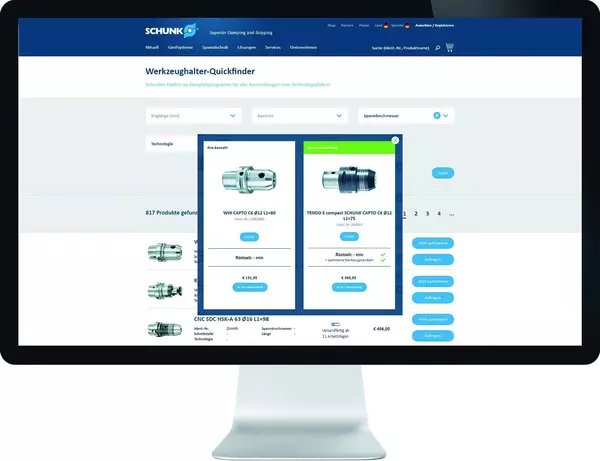
Selecting the Right Tool Management Solution
Choosing the right automation system requires evaluating several operational factors.
Manufacturers should consider:
- Machine compatibility
- Tool capacity
- Spindle speed
- Machining accuracy
- Production volume
- Tool change speed
- Tool holder precision
- Maintenance requirements
- Future production flexibility
A properly designed tool management system contributes directly to productivity and machining quality.
Future Trends in Automated Tool Management
Manufacturing continues to evolve through digitalisation and smart automation.
Emerging innovations include:
- AI-assisted tool monitoring
- RFID-enabled tool identification
- Predictive maintenance
- Digital twin integration
- Automated tool life management
- Smart tool presetting
- Industry 4.0 connectivity
- Real-time production analytics
These technologies will further improve machining efficiency while reducing production costs.
Conclusion
An automatic tool changer is essential for modern CNC machining, enabling faster production, reduced downtime, and improved operational efficiency. Equally important are high-quality tool holders, which ensure machining accuracy, stable tool clamping, and reliable cutting performance. Together, these technologies allow manufacturers to achieve greater productivity, precision, and flexibility across a wide range of industrial applications. SCHUNK continues to support advanced manufacturing with innovative automation, workholding, and toolholding solutions that help businesses optimise machining performance and remain competitive in today’s rapidly evolving manufacturing landscape.