
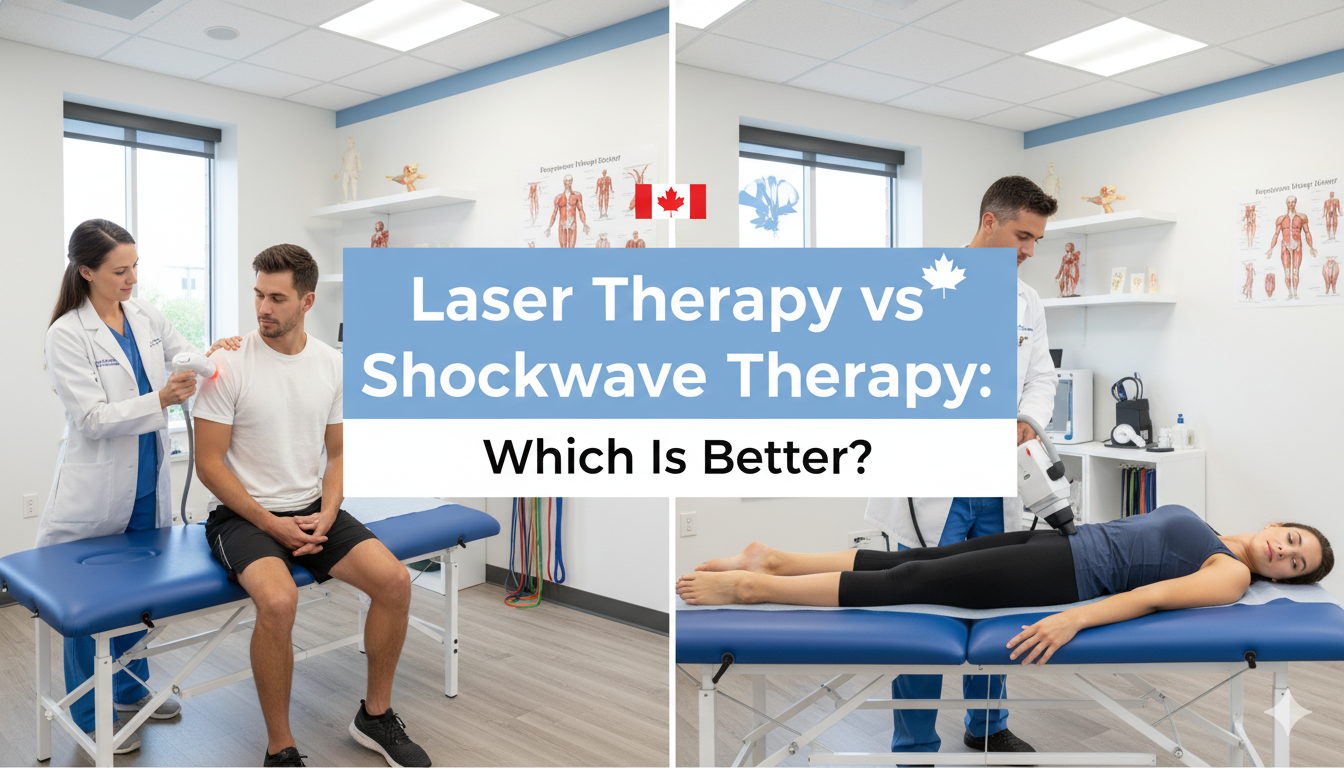
Patients dealing with pain, injuries or long term mobility issues often look for treatment options that can help them recover faster. Physiotherapy clinics today use advanced technologies to reduce inflammation, improve blood flow and promote healing. Two of the most effective options are laser therapy and shockwave therapy. Both treatments work well for different reasons, and many patients want to know which option is better. This guide explains the differences between laser therapy vs shockwave therapy, how each one works and when each treatment is recommended.
Understanding the Basics of Both Treatments
What Laser Therapy Is and How It Works
Laser therapy uses concentrated light energy to stimulate natural healing in the body. The light absorbs into the tissues, reduces inflammation and encourages cellular repair. It is gentle, relaxing and safe for most patients. Physiotherapists often choose laser therapy for sensitive areas or early stage injuries that need calm, controlled treatment.
What Shockwave Therapy Is and How It Works
Shockwave therapy uses acoustic waves that travel deep into injured tissues. These waves improve blood circulation, break down scar tissue and trigger the body’s natural healing response. Many patients turn to shockwave therapy for pain because it targets tough, stubborn injuries that have not responded to other treatments.
Laser Therapy vs Shockwave Therapy: Key Differences
Treatment Sensation and Patient Comfort
Laser therapy feels warm, relaxing and completely painless. Many patients describe it as soothing. Shockwave therapy feels more intense because it sends pulses deep into the tissues. It can be slightly uncomfortable for a moment, but the results are often faster for deeper injuries.
Speed of Results
Laser therapy provides steady improvement over several sessions. Shockwave therapy often provides noticeable relief within fewer visits, especially for chronic pain or long term injuries.
Depth of Tissue Targeting
Laser therapy works well on surface to mid depth tissues, making it ideal for inflammation and muscle pain. Shockwave therapy reaches deeper layers, which is why it works so well for tendon problems and old injuries.
Conditions Treated by Laser Therapy
Best Uses for Laser Treatment for Injuries
Laser therapy is helpful for:
-
muscle strains
-
ligament sprains
-
early stage tendonitis
-
swelling and inflammation
-
nerve irritation
This treatment is gentle, which makes it suitable for injuries that are fresh or sensitive to pressure.
When Laser Therapy Is Recommended in Physiotherapy
Physiotherapists often choose laser therapy for the beginning phase of recovery. It also works well after surgery, during flare ups or when patients cannot tolerate deeper treatments.
Conditions Treated by Shockwave Therapy
Best Uses for Shockwave Therapy for Pain Relief
Shockwave therapy is ideal for:
-
chronic tendonitis
-
plantar fasciitis
-
tennis elbow
-
calcific shoulder tendonitis
-
old injuries with scar tissue
Patients choose shockwave when they want fast relief from long term conditions.
When Shockwave Is Recommended in Physiotherapy
Physiotherapists recommend shockwave therapy when inflammation has been present for months or years. It is also used when other treatments have failed to provide relief.
Physiotherapy Laser vs Shockwave: Which One Works Better
Based on Injury Type
Laser therapy works best for new injuries, inflammation and sensitive tissues. Shockwave therapy works best for older injuries, thickened tendons and deep tissue pain.
Based on Pain Level
Laser therapy is ideal for patients who prefer gentle treatments or have low pain tolerance. Shockwave therapy is better suited for patients who want stronger, deeper treatment for chronic pain.
Based on Recovery Goals
Laser therapy supports faster healing of tissues in early stages. Shockwave therapy supports faster pain reduction for long standing issues. Many clinics use both together as part of a complete recovery plan.
Benefits and Limitations of Each Therapy
Laser Therapy Benefits and Drawbacks
Benefits:
-
relaxing and painless
-
reduces inflammation quickly
-
safe for most patients
Limitations:
-
may require several sessions
-
less effective for deep tissue injuries
Shockwave Therapy Benefits and Drawbacks
Benefits:
-
very effective for chronic pain
-
breaks up scar tissue
-
fewer sessions needed
Limitations:
-
can be uncomfortable
-
not ideal for new or inflamed injuries
Choosing the Best Therapy for Chronic Pain
How Physiotherapists Make the Decision
Physiotherapists examine the injury, review the patient’s history and consider the severity of pain. They also look at how long the injury has been present and what the patient’s recovery goals are.
When a Combination of Both Is Recommended
Some injuries benefit from both treatments. Laser therapy can reduce inflammation first, and shockwave therapy can follow to repair deeper tissues. This combination often produces faster and more complete results.
Final Verdict: Which Treatment Is Better
Laser therapy is best for early stage injuries, swelling and patients who need gentle treatment. Shockwave therapy is best for chronic pain, stiff tendons and conditions that have not improved with other therapies. The most effective treatment depends on the injury, the stage of healing and the patient’s goals. A proper assessment will help determine whether laser therapy, shockwave therapy or a combination of both will deliver the best outcome.
Check out this article, In-House vs Outsourced Medical Billing.